VARENIKI
We
all have dishes that we remember from our childhood, so often they
become our “comfort” food; and that’s what Vareniki (Вареники) are to
me. I remember as a child having them quite
often – at least once every couple of weeks - both at home and at my
grandparents’ every summer, when Mom, Dad and I would come to visit. I
think it was the first dish Mom taught me how to make.
Vareniki are crescent shaped dumplings that can be filled with mashed potatoes and onions, mushrooms, meat, sweet cheese and all kinds of berries and then boiled (in some regions of Ukraine they are steamed rather than boiled). They are usually served with a dollop of sour cream.
Note: In the States vareniki are known as "pierogi" but I intentionally do not use this name here: the word "pierogi" exists in Russian language as well and it means "pies" rather than "dumplings". It is pronounced like this [pira'gi], with the stress falling on the last syllable. So when I hear the word "pierogi", the images of big round pies with sweet or savory filling come to my mind.
How to Make Dough
There are several recipes for dough that can be used for making vareniki. Here are a few:
Method #1
Ingredients:
- 2-2,5 cups all-purpose flour
- additional flour for dusting
- 1/2 teaspoon salt
- 1 tablespoon vegetable oil
- 1/2 cup warm water
Method #2
Ingredients:
- 1 3/4 cups all-purpose flour
- additional flour for dusting
- 1/2 teaspoon salt
- 1 tablespoon vegetable oil
- 5 oz boiling water
How to Make Vareniki
Once the dough has rested, generously flour your work surface. Working with half the dough at a time, roll it out to a quarter of an inch thickness. The dough might have a tendency to spring back, this is expected. Keep rolling the dough out until it looses some of its resistance and maintains the thin rolled out shape for a little bit.
Using a 2 inch diameter round cookie cutter or thin edged class, cut out as many dough circles as you can fit onto the rolled out dough. The circles might shrink and wrinkle, this is OK.
Pick
up a dough circle and gently stretch it with your fingers (you can roll it a little, too), warming the
dough. Once the dough has relaxed, place the filling into the middle of
the circle. It should look like there is too much filling (If you are a beginner, put a little less filling - it'll be easier to handle).
Gently, working with the middle first, pull the dough over the filling, stretching the sides until they come together. It takes some practice to stretch the dough without tearing it. Once the middle is closed, work your way towards the side, pushing the filling down and crimping the edges as you go. Make certain that the edges are well sealed and that any air is pushed out before the last crimp. They can be left as they are now or you can add a cute rim at the edge. See how it's done:
Place finished vareniki on a cookie sheet lightly dusted with flour.
They may now be cooked right away or frozen in a single layer, then bagged. When frozen they keep for at least 2 months. Cook frozen vareniki the same way as you would fresh ones.
How to Boil Vareniki
Bring
a large pot of salted water to a boil. Once the water has started to
boil, drizzle in a tablespoon or so of vegetable oil onto the surface.
Boil 5-6 vareniki at a time (they should not be crowded in the pot or they will stick together) . Mix the boiling water with vareniki right after you put them into the pot - otherwise they'll stick to the bottom. They can be boiled fresh or straight from the freezer.
They are ready when they float on the surface of boiling water and the dough looses its raw color. Remove from the boiling water with a slotted spoon and drain thoroughly. Put vareniki on a buttered dish, mix, making sure all vareniki are covered with a thin layer of melted butter.
What to Do with Leftovers
If you boiled too many,
refrigerate leftovers. If your vareniki have savory filling, you will need to reheat them but do not reheat them in the microwave! Fry them
in canola/vegetable oil instead - they are going to be delicious! In
fact, some people always cook their vareniki this way: first boil, then
fry them.
If they have only fruit\berries and
sugar as a filling you can eat them cold, straight from the fridge, with
or without sour cream. I love having my sweet vareniki cold!
If they are filled with sweet cheese \ ricotta cheese, you'll need to reheat them as well. You can do it on the stove top: put vareniki in a pan, add a teaspoon of butter and a tablespoon of water, cover and heat on low turning once.
Reheating vareniki in the microwave should be avoided if possible, as the dough acquires an unpleasant aftertaste when heated that way.
***********************************************************************************
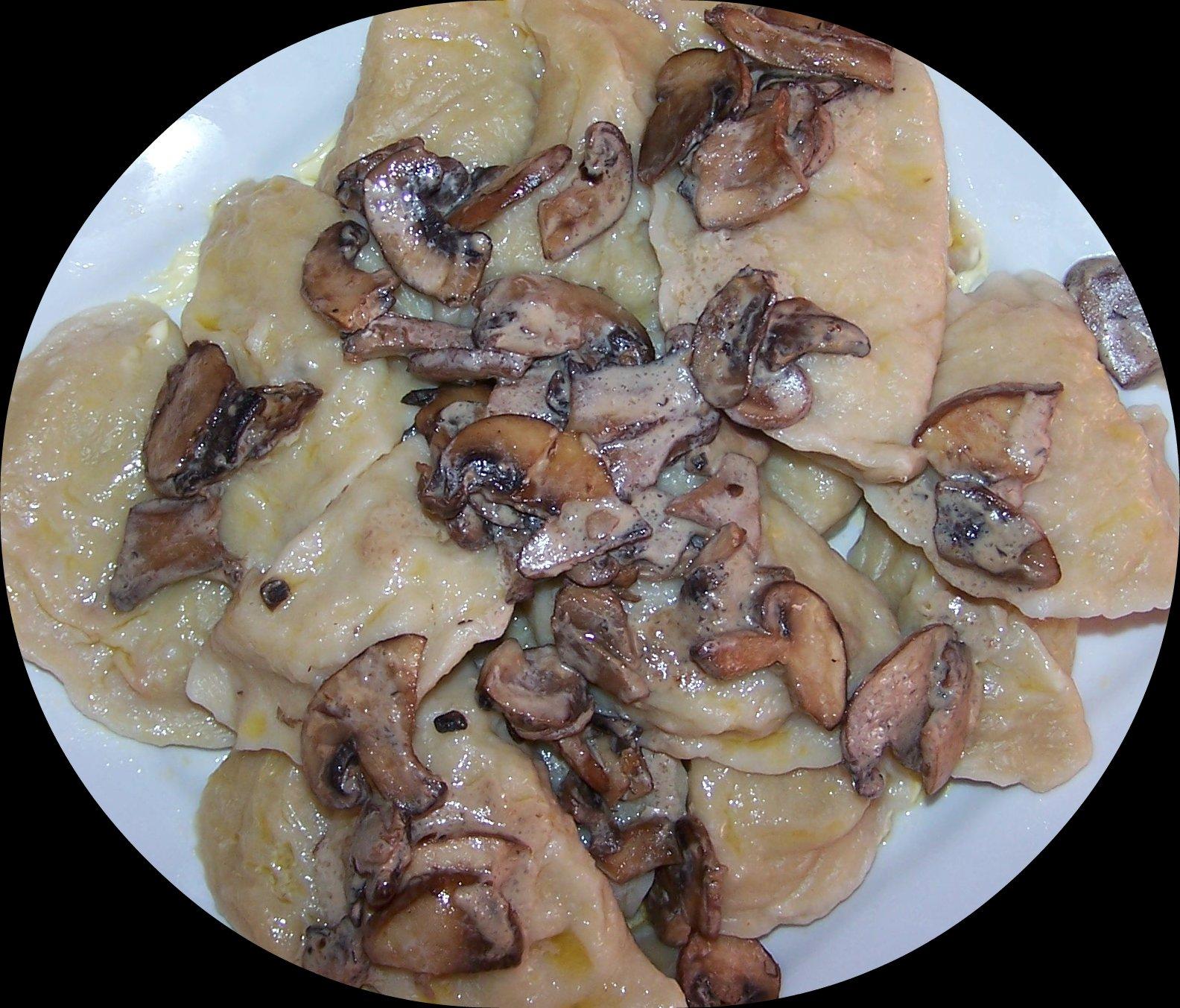
Vareniki with cherry filling are my favorites but those with potatoes are the easiest to make and I have never met a person who didn’t like them, so that’s the first recipe I’m going to share with you.
For dough: Use ingredients from "How to Make Dough", Method #1 -------------------------------------------------------- For Mushroom Sauce:
| For filling:
|
Mushroom Sauce: Fry any fresh mushrooms in oil for 2-3 minutes, add sour creme, cook for another 2-3 minutes. | 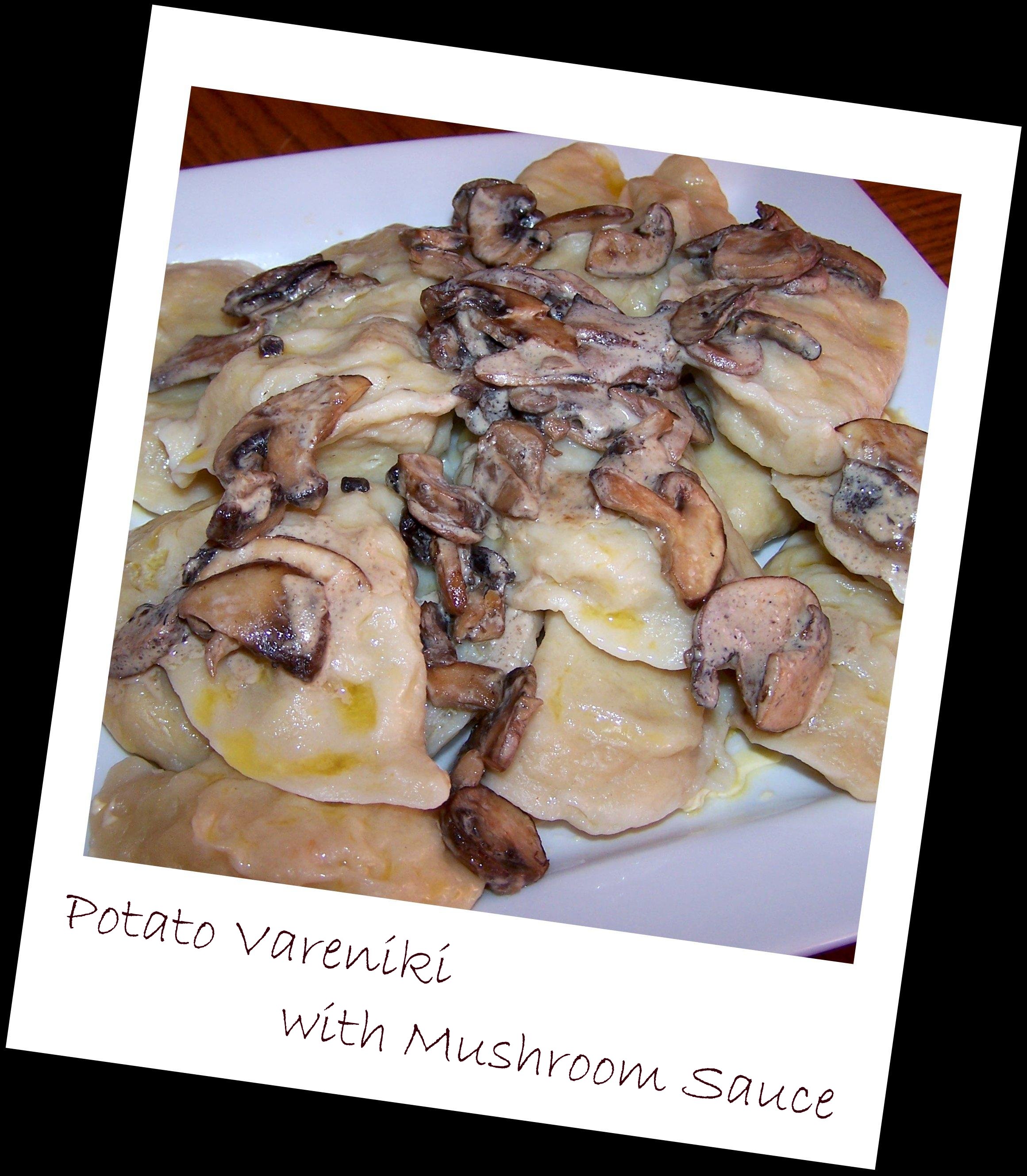 |
***********************************************************************************
Vareniki with cabbage are very yummy. Different regions of Russia, Belarus and Ukraine offer numerous variations of making the filling. These are some of my favorites:
Vareniki with Cabbage-and-Mushroom Filling
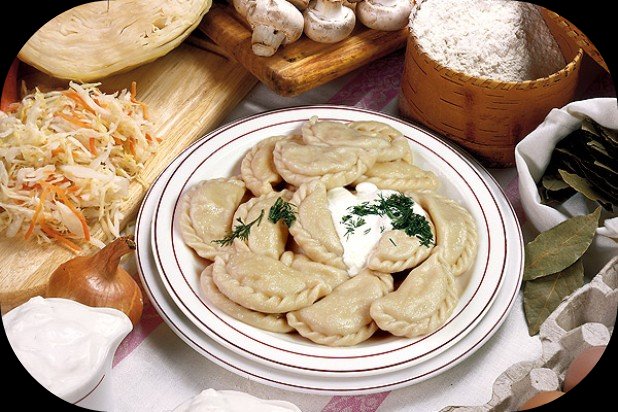
For dough: Use ingredients from "How to Make Dough", Method #1 ----------------------------------------------------------
For topping: sour cream
| For filling: cabbage - 1 lb white\yellow onion - 2 medium mushrooms (any) - 0,5 lb tomato paste/ ketchup - 1 Tbs canola oil - 1 Tbs salt/pepper to taste parsley |
Shred cabbage very finely, chop onions and mushrooms (if using dried mushrooms, rehydrate them first). Saute vegetables together with a tablespoon of water, tomato paste or ketchup and oil for 20 minutes. Add salt and pepper, let the mixture cool. Add finely chopped parsley. Use Method #1 to make dough. Make vareniki using instructions from "How to Make Vareniki". Freeze those that you do not intend to cook right away. Cook as described in "How to Boil Vareniki" (you can also lightly fry them after they are boiled) and serve with a dollop of sour cream and fresh dill.
Vareniki with Cabbage-and-Carrot Filling
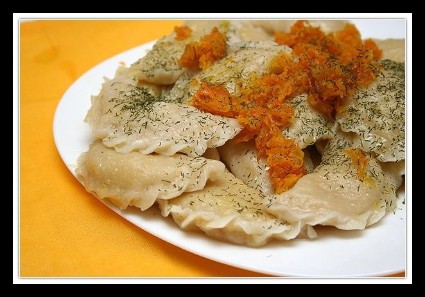
For dough: Use ingredients from "How to Make Dough", Method #1
| For filling and topping:
cabbage - 1 lb carrot - 2 large white\yellow onion - 1 large olive oil - 1 Tbs salt\pepper |
Chop onions and grate carrot finely, fry in oil until soft. Put 2 Tbs of carrot\onion mixture aside. Add very finely shredded cabbage and a tablespoon of water to the rest of the mixture and sauté covered, until done (cabbage should be very soft). Add salt and pepper, let the mixture cool. Use Method #2 to make dough.
Make vareniki using instructions from "How to Make Vareniki".
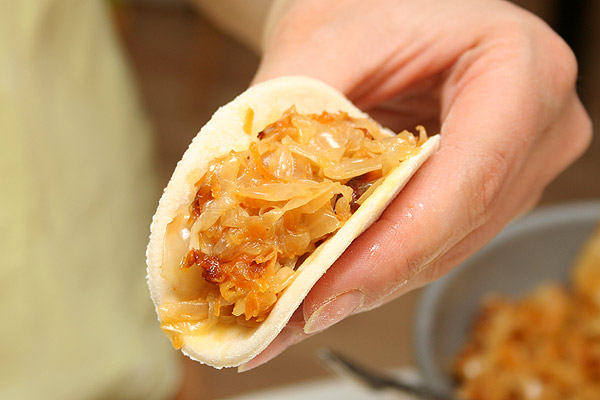 | 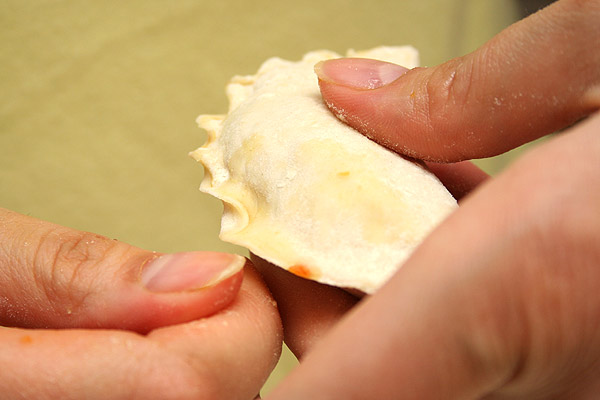 |
Freeze those that you do not intend to cook right away. Cook as described in "How to Boil Vareniki". Serve vareniki using the rest of fried carrot and onions as a topping (reheat it in the microwave first) with sour cream on the side.
************************************************************************************
Vareniki with Meat Filling

For dough: Use ingredients from "How to Make Dough", Method #1 or #2 -------------------------------------------------------------
For topping: onion - 1 medium canola oil - 1 Tbs sugar - 0,5 tsp |
For filling: pork - 1 lb beef - 1 lb white\yellow onion - 1 large canola oil - 1 Tbs salt\pepper |
Cook meat in the steamer or boil it. Ground cooked pork and beef, mix them together and add 2 Tbs of broth they were cooked in or water, beat with a wooden spoon until liquid is absorbed. Chop onion finely and fry it in oil until soft and transparent, add to grounded meat.
Prepare dough using any method and cook in boiling water as recommended above. These vareniki will taste absolutely delicious if after boiling them, you pan-fried them in oil until crispy.
For topping: slice onion into thin ringlets and fry in oil with sugar until caramelized. Serve vareniki topped with onions and sour cream on the side.
***********************************************************************************
